01 / 06Overview
  1. 01Overview
  2. 02Why we built it
  3. 03What changed
  4. 04What comes out
  5. 05How it works
  6. 06Watch
Case study · In-house since 2026

Akane Studio

The pipeline behind KanjiHub's daily videos. A short script goes in; a finished vertical lesson comes out — characters voiced and lip-synced, captions word by word, reading cards, kanji built from their parts — reviewed in a local panel, then scheduled to five platforms.

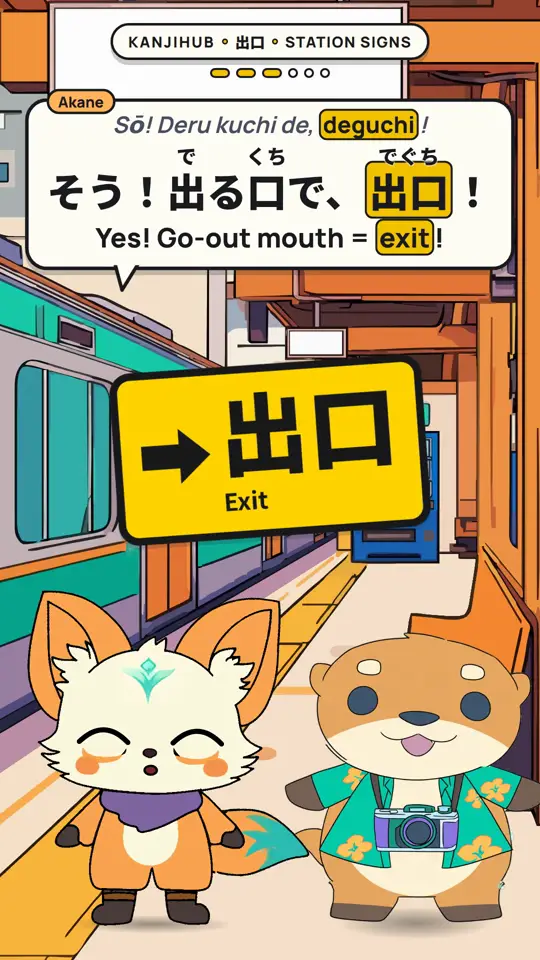
A still from a posted video: Akane and Kawa-chan under the 出口 sign, exit, with the line captioned word by word
The review panel on a phone: a posted episode, its words and the platforms it went to
Format
Vertical, 20–35 seconds
Input
A short script
Output
5 platforms, one queue
Runs
On our own machine

In numbers

videos rendered
228
series, each with its own format
12
characters in the cast
15
platforms, scheduled from one queue
5

Counted in the review panel, October 2026

02Why we built it

A video a day, from a studio of one

  • 1short script in
  • 1finished video out
  • 5platforms, one queue

KanjiHub teaches with short daily videos: a real situation, a common mistake, the right word. Animating each one by hand would take a day — and one person makes them.

So we wrote the steps down once. A script holds only what's creative: who speaks, what they say, which word it teaches. Everything mechanical — voices, mouths, captions, timing, cards, covers, scheduling — is derived from it, the same way every time.

The studio runs on our own machine and turns a script into a finished video, with a person watching every one before it goes out.
03What changed

Hand work, turned into steps

Four jobs that would eat a day per video — and what the studio does instead.

  1. By hand

    Animating every scene

    Posing characters and timing each move, clip after clip.

    In the studio

    A script in, a video out

    The script names the speakers, their lines and the beats; characters, scenes, expressions and timing are assembled from it.

  2. By hand

    Mouths that just flap

    Open, shut, open — whatever the line says.

    In the studio

    Lips that match the words

    Each syllable's vowel is read from the word timings of the voice take, so the mouth makes the shape of what is being said.

  3. By hand

    Subtitles as a block

    A line of text under the picture, read or missed.

    In the studio

    Captions word by word

    Each word lights up as it's spoken, with its reading above the kanji and the meaning below.

  4. By hand

    Uploading five times

    The same video, retitled and posted platform by platform.

    In the studio

    One queue, five platforms

    An approved video is scheduled to all five from one queue, with its cover and text — and leaves the queue once it's out.

04What comes out

One script, one finished video

This is what the pipeline delivers: Akane and Kawa-chan at a shop door, every line voiced, lips moving on each syllable, the words lighting up as they're said and a kanji card at the moment it matters.

Watch the full video
05How it works

From script to scheduled

Follow one video through the studio — the phone shows each step.

  1. 01 / 06

    Pick a series

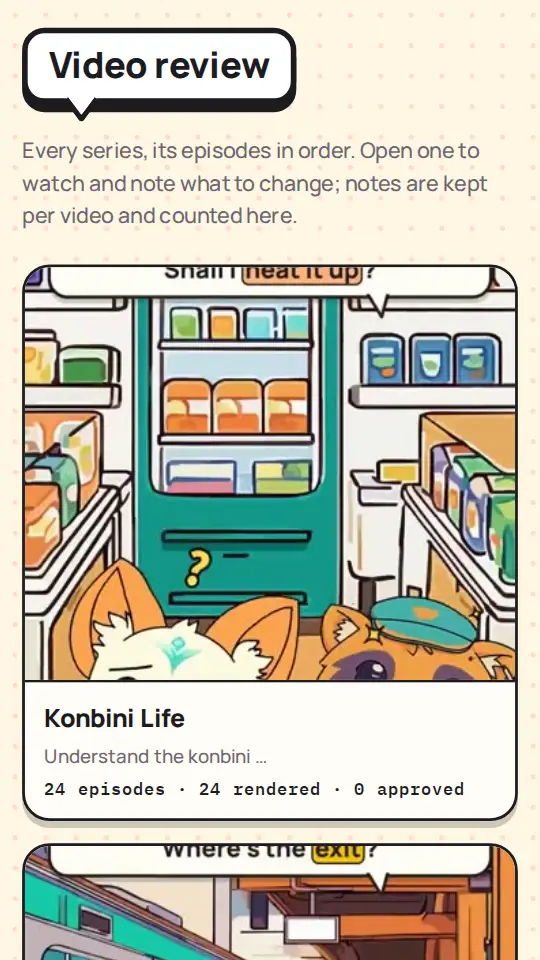
    Every video belongs to a series with a fixed shape: a sign to read, a word written the way it is, a month that isn't said how you'd think. The panel shows each series and how far its episodes have got.

    The review panel listing video series with their episode counts
  2. 02 / 06

    Cast the characters

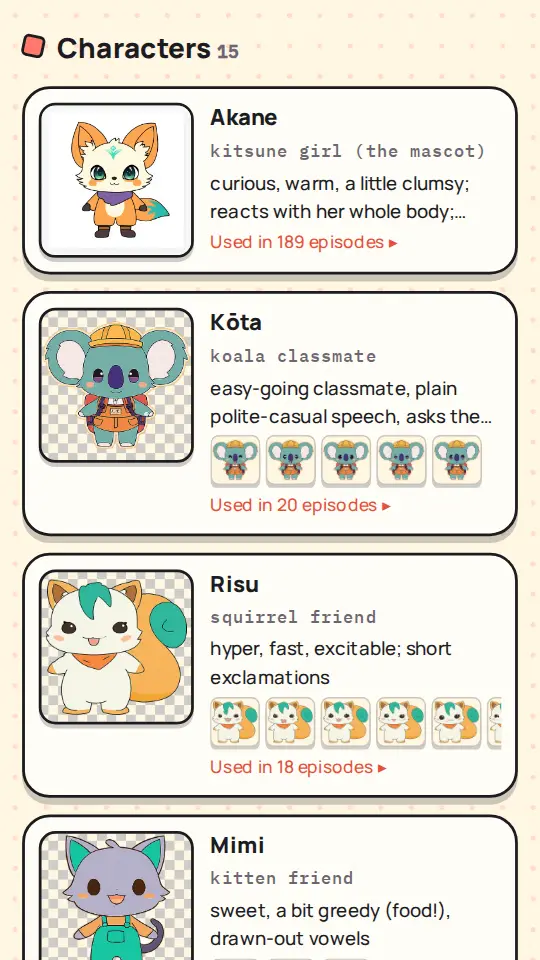
    A fixed cast, each with a voice, a set of faces and a personality the script keeps to. One character knows; the other makes the mistake a viewer would make.

    The review panel's cast page: Akane, Kōta, Risu and Mimi with their faces
  3. 03 / 06

    Voice and lip-sync

    Every line is voiced in Japanese, and each take is checked against the script before it's used. The mouth takes the vowel of every syllable from the take's word timings; characters blink, nod on their words and tilt on their questions.

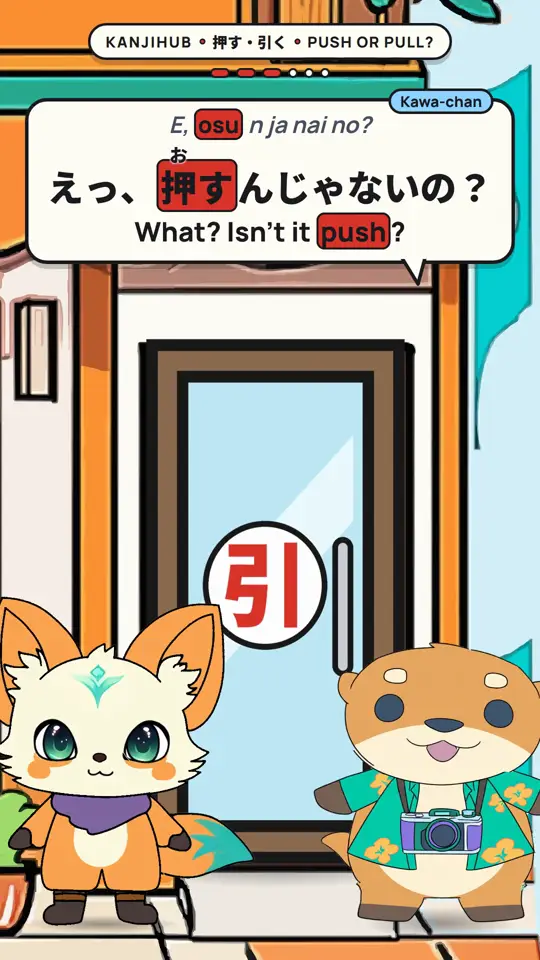
    A video still: Kawa-chan asks whether the door says push, the line captioned word by word
  4. 04 / 06

    Captions and reading cards

    Captions light up word by word, with readings over the kanji and the translation below. When a word matters, a card holds it on screen with its reading and meaning.

    A video still: the card 四月, April, beside a captioned line about how it's read
  5. 05 / 06

    Kanji from their parts

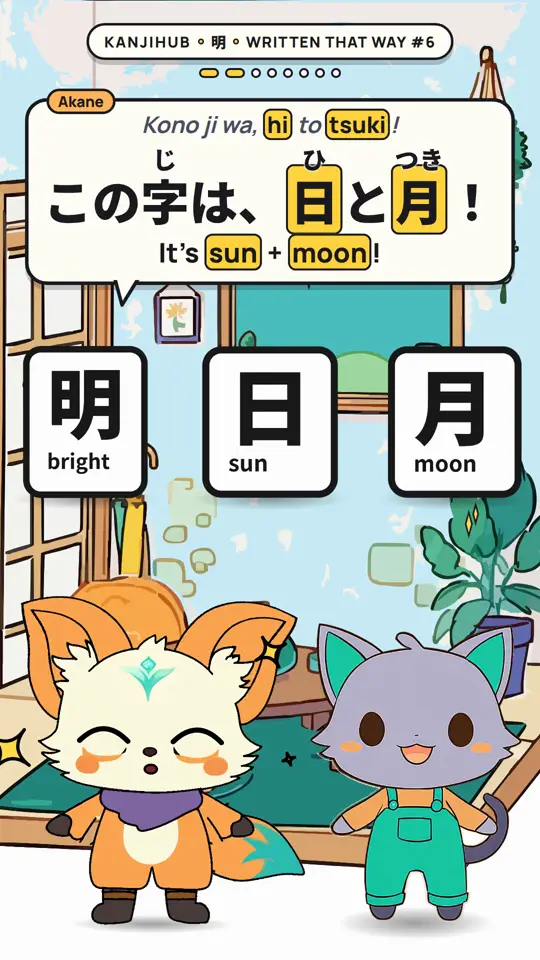
    A kanji arrives with the pieces it's made of, so the shape explains itself: the kanji for bright is the kanji for sun beside the kanji for moon.

    A video still: the cards 明, 日 and 月 — bright is sun plus moon
  6. 06 / 06

    Review, then schedule

    Every render lands in a local review panel. Press Change this: the video pauses, the second is noted and you write what's wrong. Approved videos join one queue that posts to five platforms.

    The review panel: a posted episode with its words and the five platforms it went to
06

See what comes out

New videos every day, with Akane and her friends.