
01 / 07Overview
  1. 01Overview
  2. 02Why we built it
  3. 03What changed
  4. 04On video
  5. 05How it works
  6. 06Under the hood
  7. 07Try it
Case study · Live since 2026

KanjiHub

A web app for learning Japanese from Hiragana to JLPT N1 — by writing, listening and reading real words in context, with reviews that bring each word back right before you'd forget it.

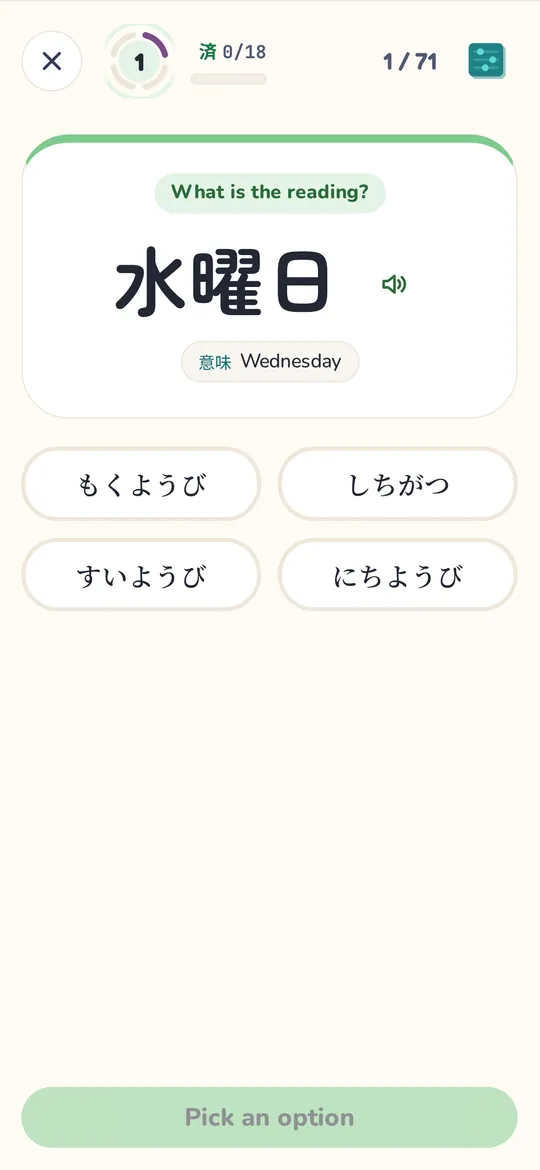
KanjiHub question screen: pick the reading of 水曜日, Wednesday
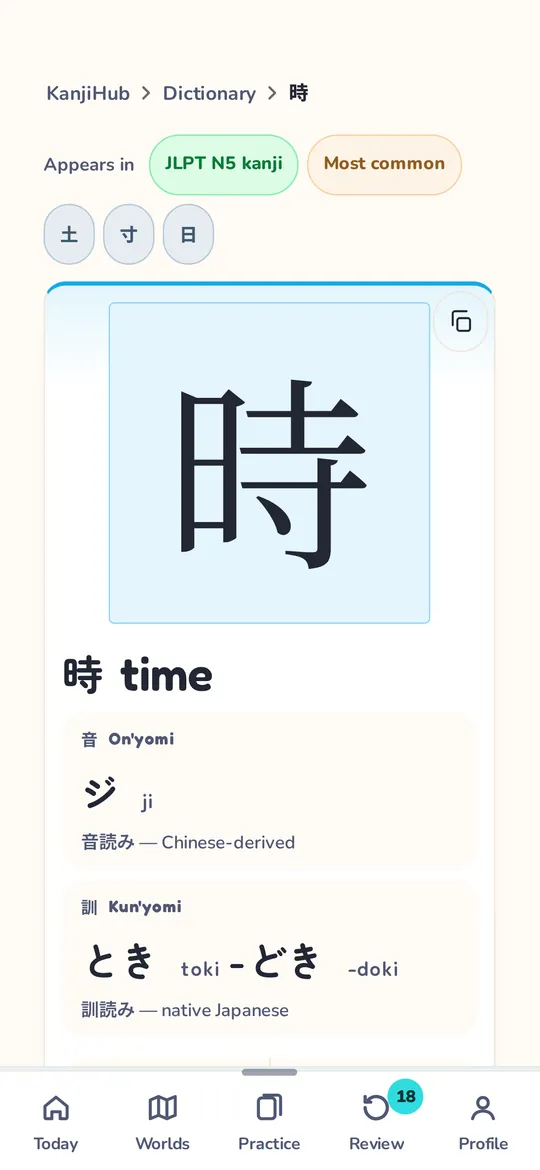
KanjiHub dictionary entry for the kanji 時
Worlds
7 — Hiragana to N1
Platforms
Web · Android (offline)
Interface
5 languages
Open to all
Hiragana, Katakana, N5

In numbers

worlds, from Hiragana to N1
7
dictionary entries
217,201
kanji with readings and stroke order
13,108
pets to collect
14

Figures published on kanjihub.com

02Why we built it

Born from one summer of writing words on paper

  • 1summer
  • < 2months
  • 500+kanji and words

Years ago, our founder tried app after app to learn kanji. Most felt the same: a kanji, a list of isolated readings, and little else. Then one app changed it — it taught kanji through real vocabulary, in context.

One summer — less than two months — went into it: reading every word out loud and writing each one down on paper. By the end, more than 500 kanji and words were learned, enough to follow simple sentences in Japanese videos before studying any grammar.

KanjiHub is that method, made into the app we wished existed: everything that worked, without what didn't.

AI helps you build great things — but you have to understand the structure, the content you teach and how you teach it.
Bryan Tito, founder
03What changed

What we saw, and what we built instead

Four habits of learning apps we didn't want — and how KanjiHub turns each one around.

  1. What we saw

    Reading without writing

    Memorising by sight alone, so the characters never reach your hand.

    What KanjiHub does

    Write it by hand

    Trace each kana and kanji stroke by stroke, then write it from memory — on screen, and on paper alongside.

  2. What we saw

    Robotic default audio

    Flat, generic voices that are hard to listen to and repeat.

    What KanjiHub does

    Listen and repeat

    Every word is voiced, so you can play it, follow along and say it out loud.

  3. What we saw

    Readings without context

    Countless isolated readings instead of words you'll actually meet.

    What KanjiHub does

    Words in context

    Kanji arrive inside real vocabulary and sentences — the words you will actually read and hear.

  4. What we saw

    Pages made in one prompt

    Generic screens and generic content — no sign anyone cared how it teaches.

    What KanjiHub does

    A world, designed

    Original art, a fox guide called Akane, and every screen checked on real phones.

04On video

Japanese in 30 seconds, with Akane

Every day a short video: a real situation, a common mistake, and the right word — Akane, KanjiHub's fox guide, and her friends act it out. This one: a door you have to pull, not push.

Watch the full video
05How it works

From your first kana to N1

Scroll through a learner's journey — the phone follows along.

  1. 01 / 05

    Pick your world

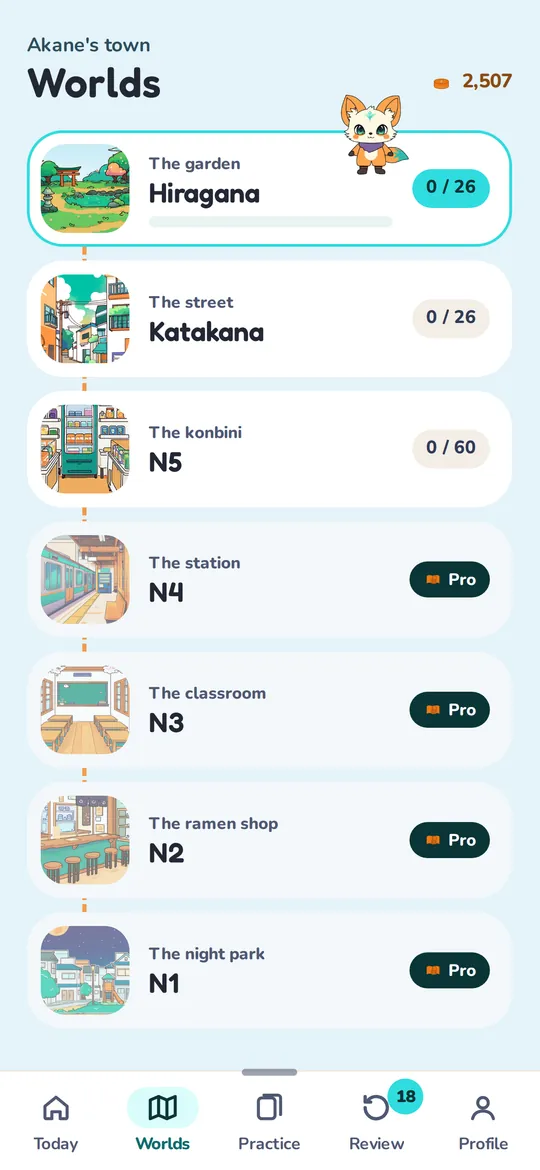
    Seven worlds in order — Hiragana, Katakana, then JLPT N5 to N1. Each one is a path of short lessons.

    KanjiHub's seven worlds, from Hiragana to N1
  2. 02 / 05

    Meet new items

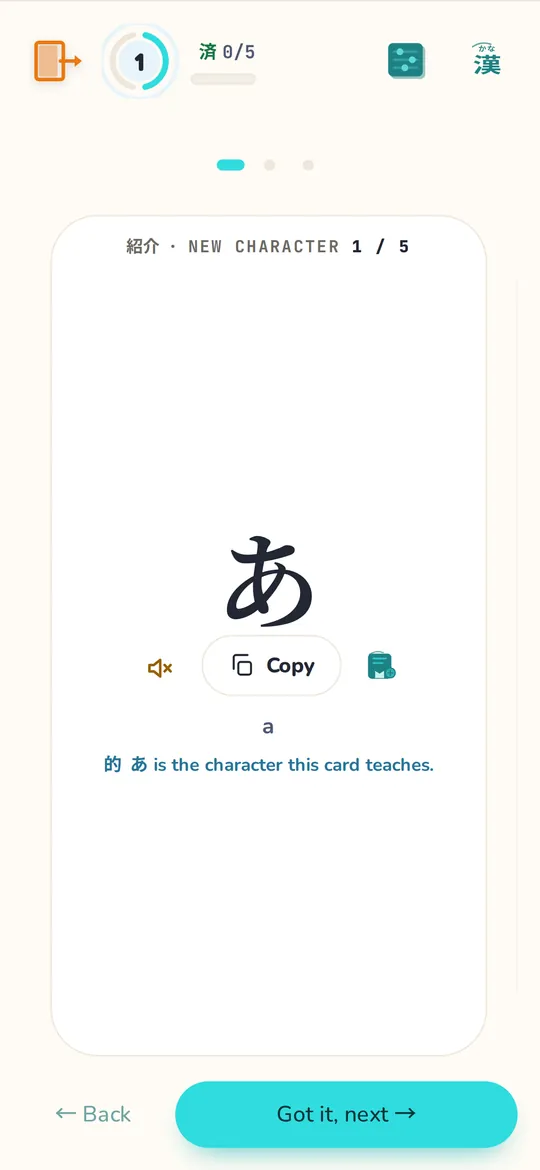
    A level session introduces a few characters or words at a time: reading, meaning, audio and stroke order together.

    A KanjiHub lesson introducing the hiragana あ
  3. 03 / 05

    Reviews that test you

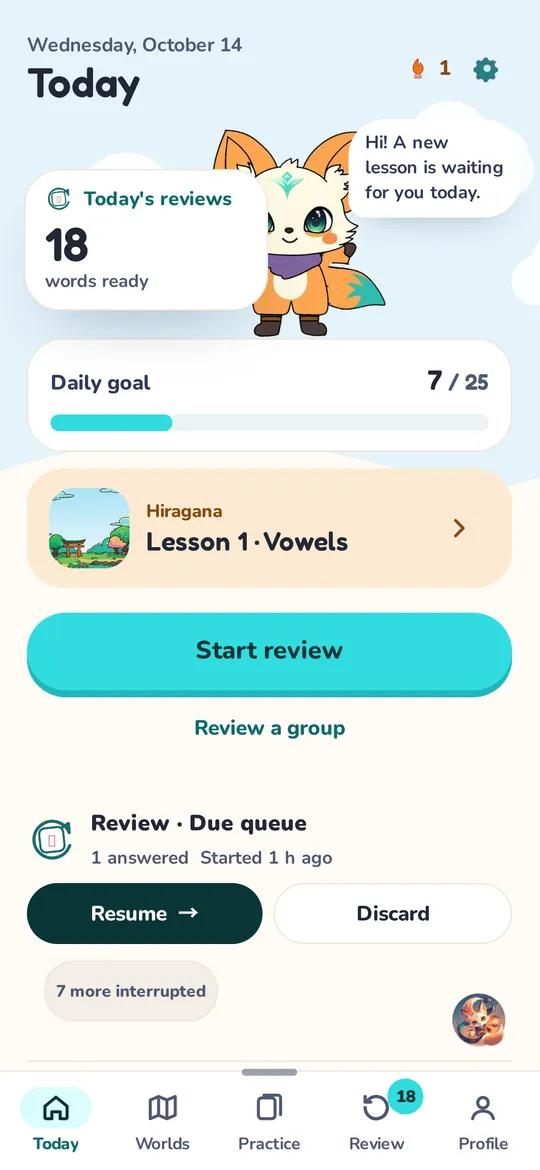
    Words come back on a spaced-repetition schedule and are asked several ways. Streaks, pets and achievements keep you coming back.

    KanjiHub's Today screen with 18 reviews ready
  4. 04 / 05

    Practice your way

    Minigames and custom sessions from your own lists — conjugations, days, numbers — without touching your reviews.

    A KanjiHub question: pick the reading of 水曜日, Wednesday
  5. 05 / 05

    Look anything up

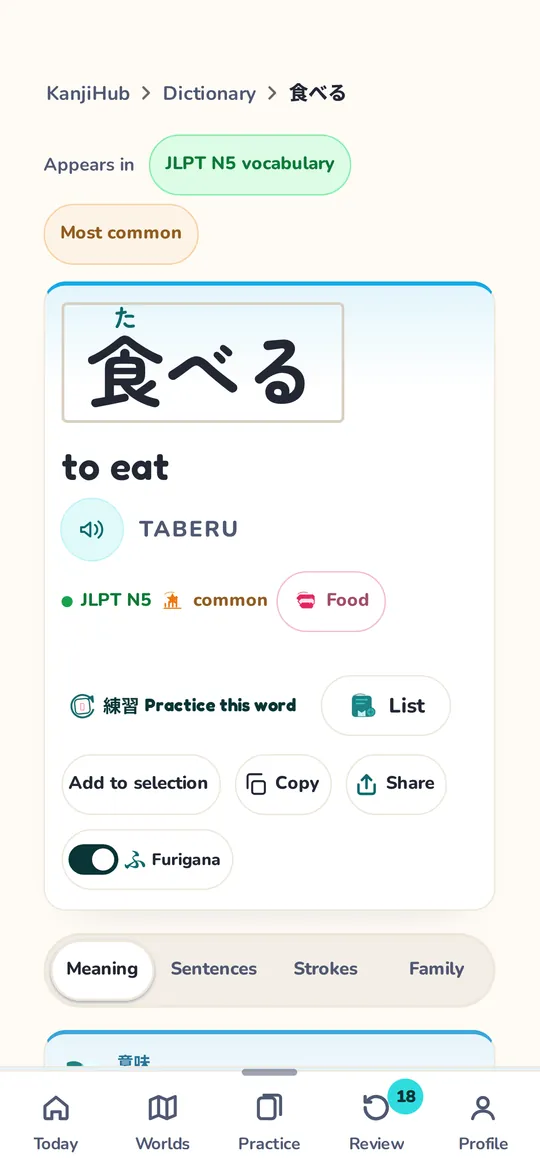
    A full dictionary: readings, strokes, meanings in several languages, examples and audio.

    KanjiHub's dictionary entry for 食べる, to eat
06Under the hood

Built to be fast, everywhere

One codebase for the web and the phone, with the learning rules written once and run on both.

App

  • SvelteKit

    The web app and the site — moved from Next.js when builds got heavy and offline kept fighting it.

  • TypeScript

    Every line of the app, typed end to end.

  • Capacitor

    Wraps the same app as an Android app.

Edge

  • Cloudflare Workers

    Serves kanjihub.com and app.kanjihub.com from the edge, close to every learner.

  • Cloudflare R2

    Content-addressed storage for audio and art, served from the edge.

Core

  • Rust

    Spaced-repetition scheduling, grading and handwriting recognition, written once.

  • WebAssembly

    The same Rust code, compiled to run in the browser and on the phone.

Data

  • Supabase

    Database and accounts.

  • SQLite

    A database on the phone, so lessons, reviews and the dictionary work with no connection.

Operations

  • Resend

    Account emails.

  • PostHog

    Privacy-friendly product analytics, only with consent.

  • Sentry

    Error tracking, so problems get fixed before they're reported.

  • Norma

    Checks code against our standards as it's written, the same verdict every time.

07

See it for yourself

Start with Hiragana, Katakana and N5 — no card needed.